


From the Lecture Hall to the Hospital, your medical degree program
An overview of the program combining comprehensive training, real-world experience, and meaningful impact.

Medicine program
Overview of the course structure, content, and program outline

Your study roadmap
Structured medical degree program
The UMFST-UMCH study program is divided into two phases: pre-clinical training in the first three years and clinical training in the last six semesters. In the pre-clinical phase, students acquire theoretical foundations in subjects such as anatomy, biochemistry, and physiology. From the fourth year onwards, the clinical phase begins, where practice-oriented teaching is provided through our extensive network of teaching institutions. This course structure combines theoretical and practical content to ensure a comprehensive medical education.
Quick facts about studying at UMFST-UMCH

Program start
Annually at the end of September

Language of instruction
English for classes
(German or Spanish in teaching hospitals)

Free German courses integrated into the 6-year curriculum
(Reach B2 level in the first two years for German hospital training)

Duration of study
6 years (12 semesters)

ECTS credits
360 ECTS credits

Admission requirements
High school diploma

Admission process
Online application, motivation-based interview & short evaluation in English
Course progression
Overview of the program outline
Pre-clinical phase
Study years 1 and 2
The pre-clinical phase, prepare students for the clinical part of medical studies. Instruction is primarily delivered through lectures, lab activities, and seminars, with an emphasis on foundational subjects that lay the scientific groundwork for the years ahead. Key topics include biochemistry, biophysics, cell biology, genetics, and histology. Additionally, students learn about the anatomical structures and physiological processes of the human body.
Other important topics in the pre-clinical phase include doctor-patient communication, medical deontology, ethics, academic integrity, and medical terminology. In this phase, students gain initial insights into the medical profession and acquire the necessary medical and scientific knowledge for the clinical part of the program. Unlike at German public universities, the pre-clinical phase at UMFST-UMCH does not end with a preliminary examination.
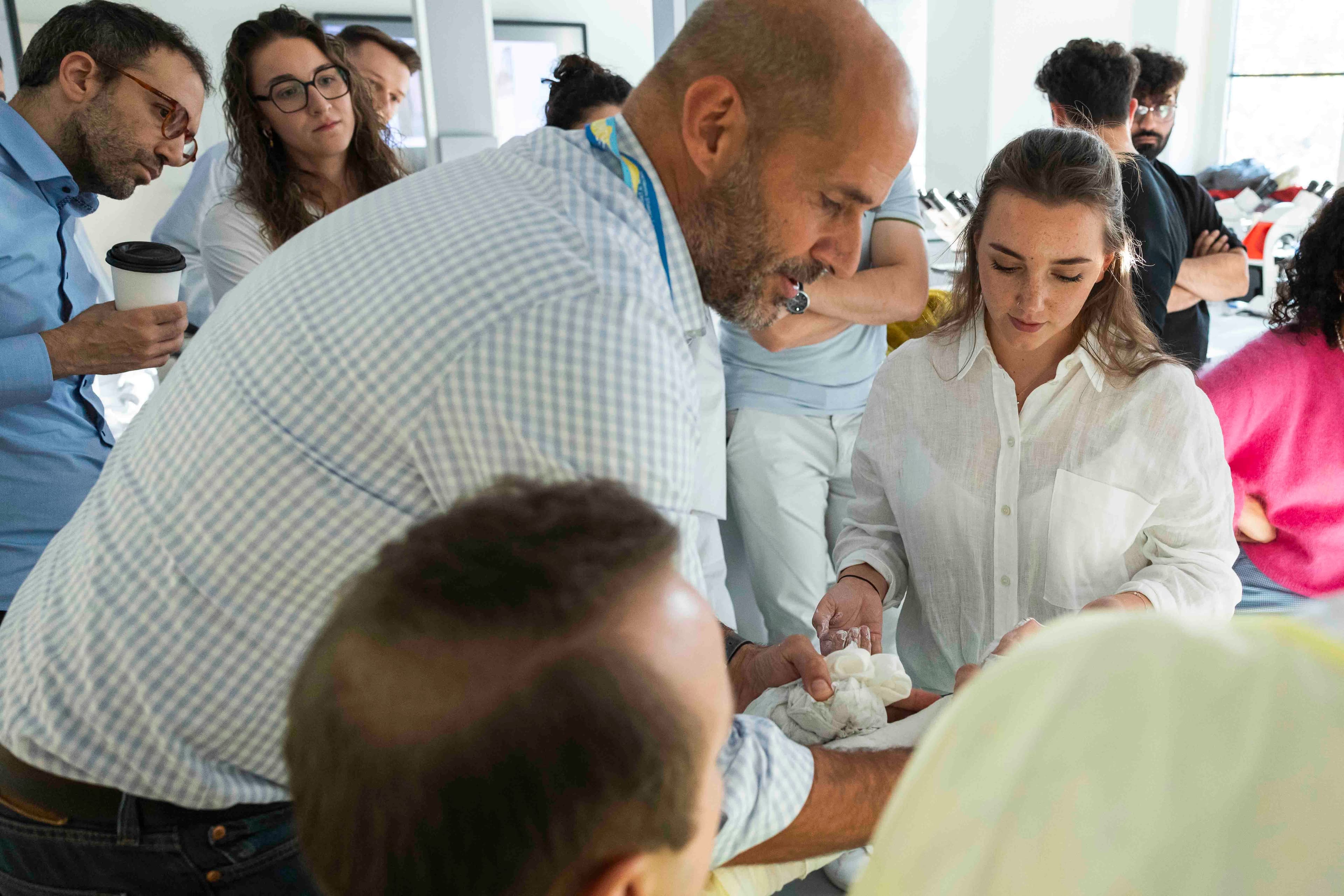
From the first year of study onward, students can choose from a variety of elective courses to deepen their knowledge in specific medical fields. A multi-week summer internship provides students with their first insights into hospital life and promotes patient contact. Modules are completed with multiple-choice tests and practical exams to evaluate the students' theoretical and practical knowledge. During summer, two-week modules, such as anatomy or pathology courses, offer more hands-on experience.
Free German Courses
At UMFST-UMCH, international students benefit from a comprehensive and free German language program integrated into their medical studies. In the first two years, you will reach B2 level, preparing you to communicate confidently during your clinical training in German teaching hospitals from year three onwards.

Clinical phase
Study years 3 to 6
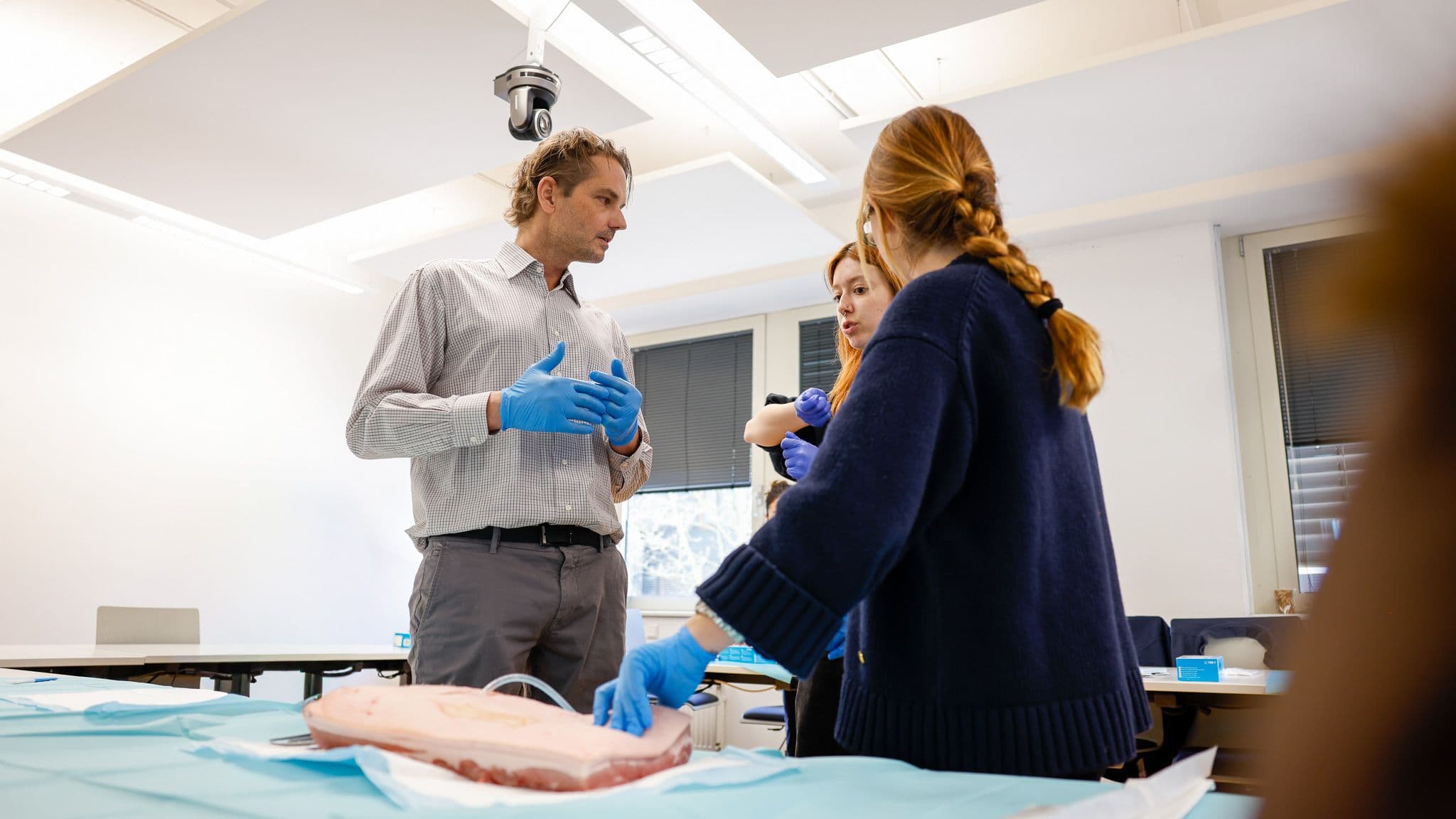
The clinical phase at UMFST-UMCH spans the third to sixth years and focuses on the various diseases of the human body. During this phase, students first acquire theoretical knowledge of clinical medicine over six to ten-week periods. This knowledge is then deepened through hospital internships at UMFST-UMCH teaching hospitals, where students gain hands-on experience in small groups of up to ten. They learn direct patient care and get insights into different medical specialties.
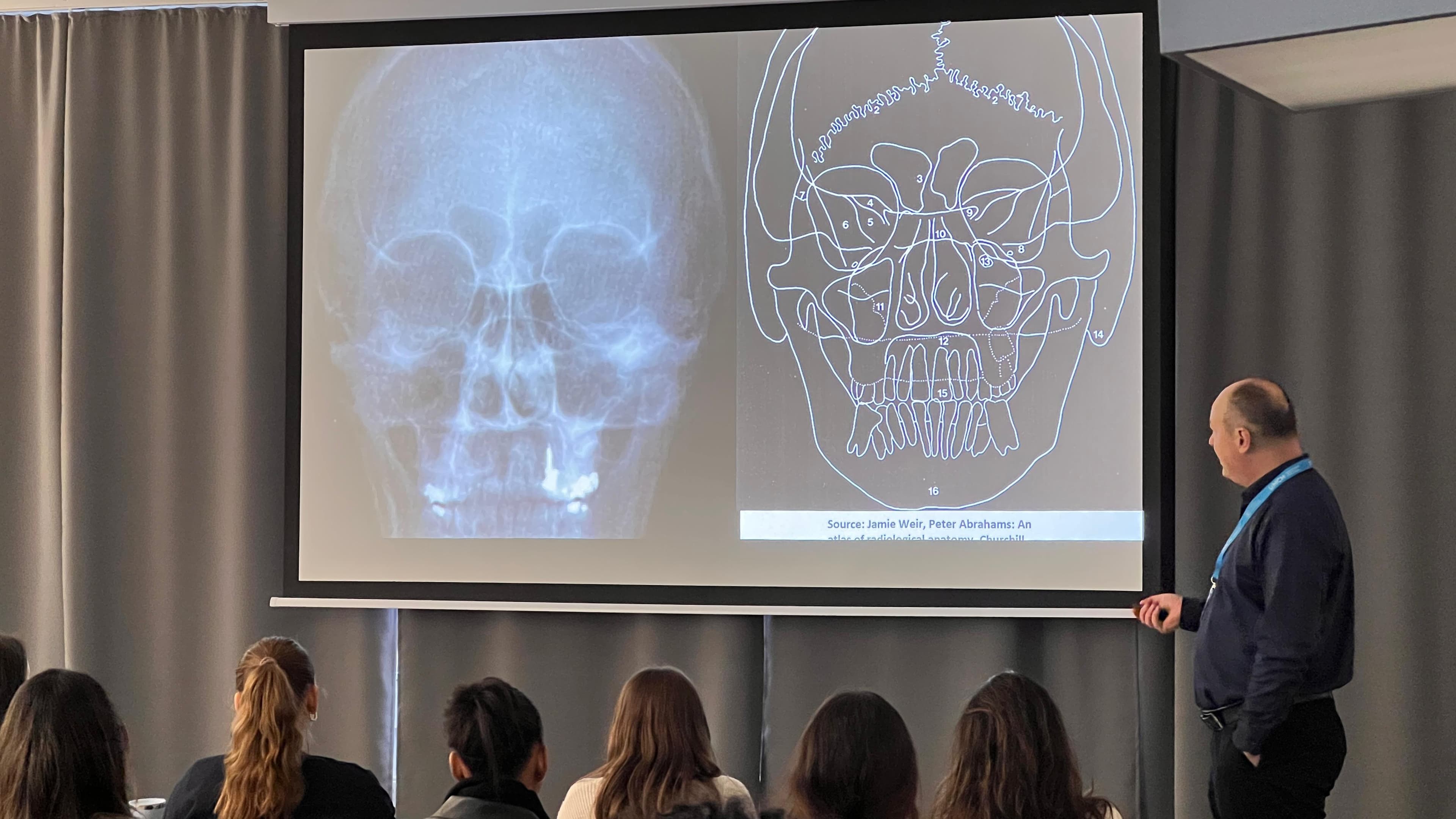
Core subjects in this phase include cardiology, gastroenterology, general surgery, orthopedics, pediatrics, neurology, ophthalmology, ENT, gynecology, urology, oncology, and many more. Additionally, students cover interdisciplinary subjects such as emergency medicine and an introduction to imaging techniques like CT, ultrasound, and X-ray.
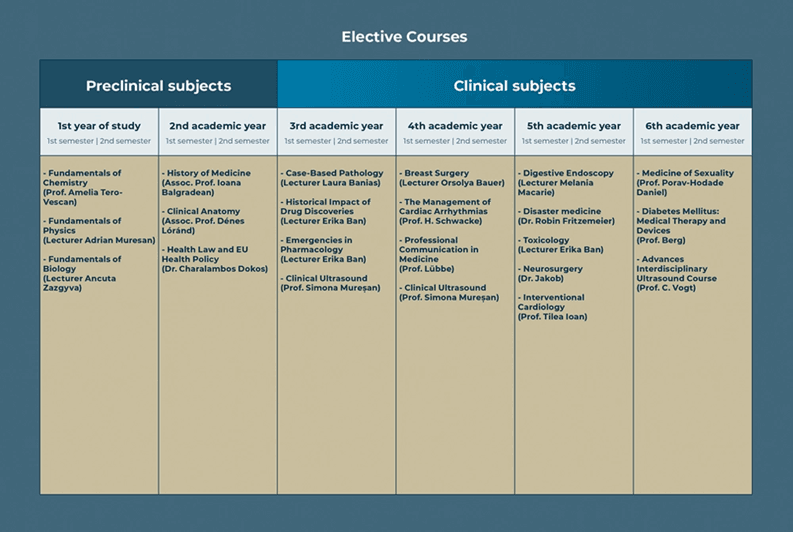
Additionally, students can select from a variety of elective courses during their studies to deepen their knowledge in specific areas and acquire practical skills. Each module is completed with multiple-choice tests and practical exams to evaluate theoretical and practical knowledge.
The medical studies conclude with a graduation exam, which consists of a written final examination and a research thesis
Free German Courses
From your third year onwards, you can continue with advanced German courses to reach C1 level, preparing you for professional life in Germany. This continued learning will help you confidently pass the Fachsprachenprüfung and, after completing your six-year medical program, apply for your German medical license (Approbation) in Germany.
Program structure
A clear structure for your success in medical studies

Program content
Overview of program content
The UMFST-UMCH medical program spans six years, providing students with comprehensive training in topics ranging from medical fundamentals to specialized fields such as pharmacology and surgery, infectious diseases, and forensic medicine. The curriculum balances theoretical knowledge and practical application in a clinical context.
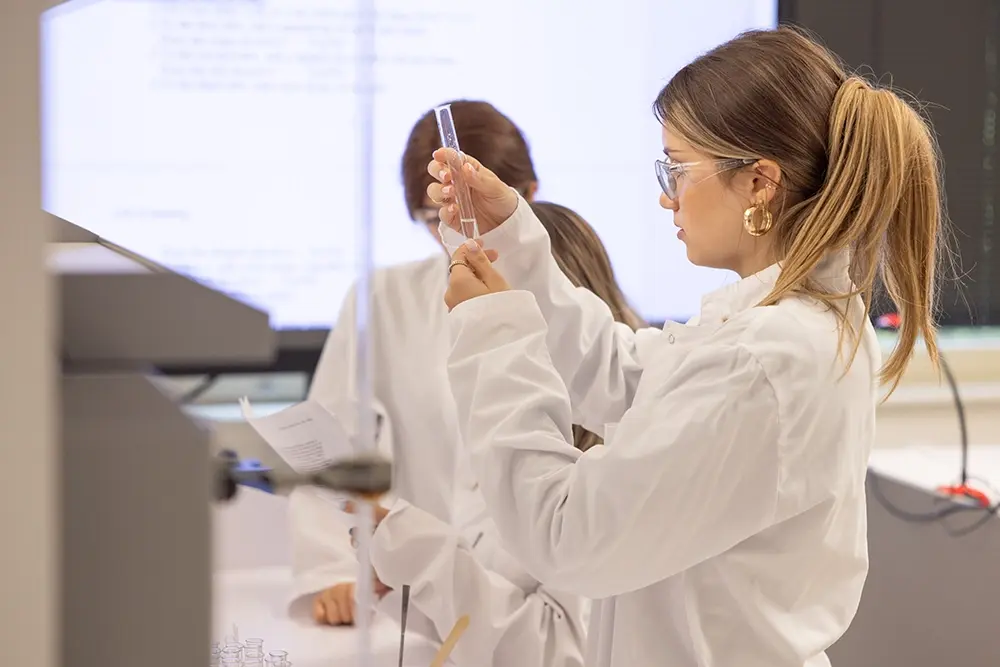
1st year of study
Some of the preclinical subjects of the 1st year of study:
- Anatomy
- Physiology
- Biochemistry
- Biochemistry
- Medical Informatics
- Medical Biostatistics
2nd year of study
Some of the preclinical subjects of the 2nd year of study:
- Physiology
- Patient-Doctor Communication
- Genetics
- First Aid
- Histology
- Introduction in Practical Work

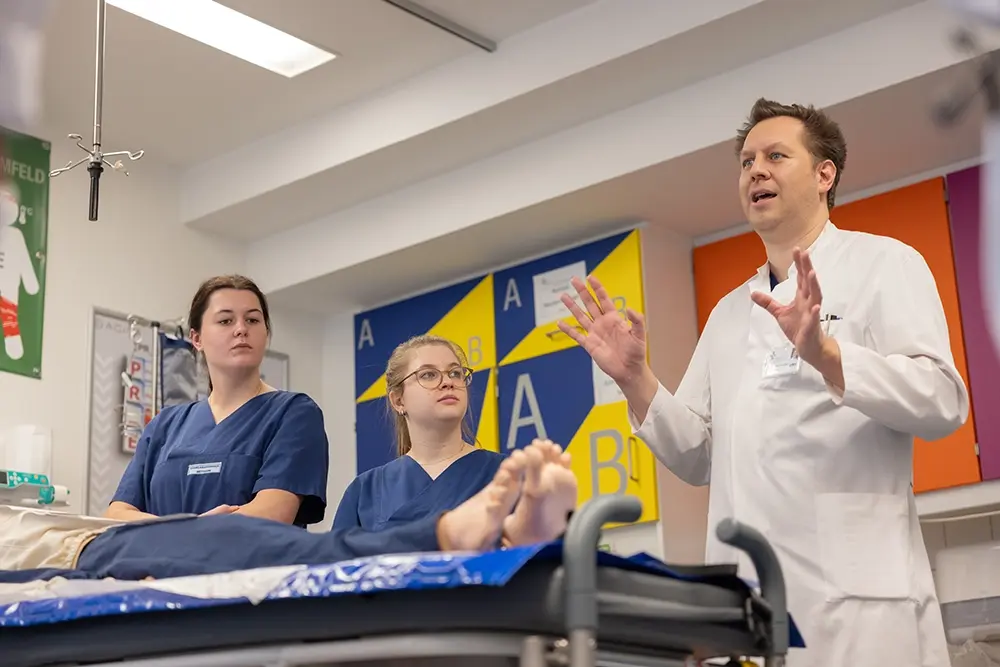
3rd year of study
In addition to the clinical subjects, the following courses are taught in the 3rd year:
- Pathology
- Pharmacology
- Pathophysiology
- Bacteriology
- Hygiene
- Scientific Research Skills
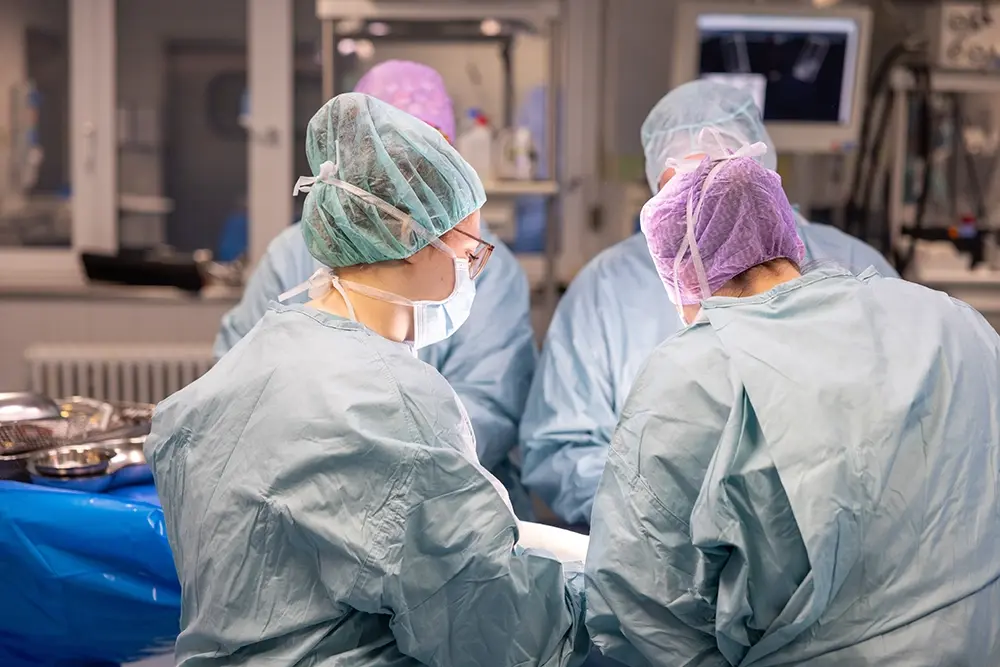
4th year of study
Subjects in the 4th year include, among others:
- Orthopedics and Trauma Surgery
- Cardiology
- Emergency Medicine
- Radiology
- General Surgery
- Occupational Medicine
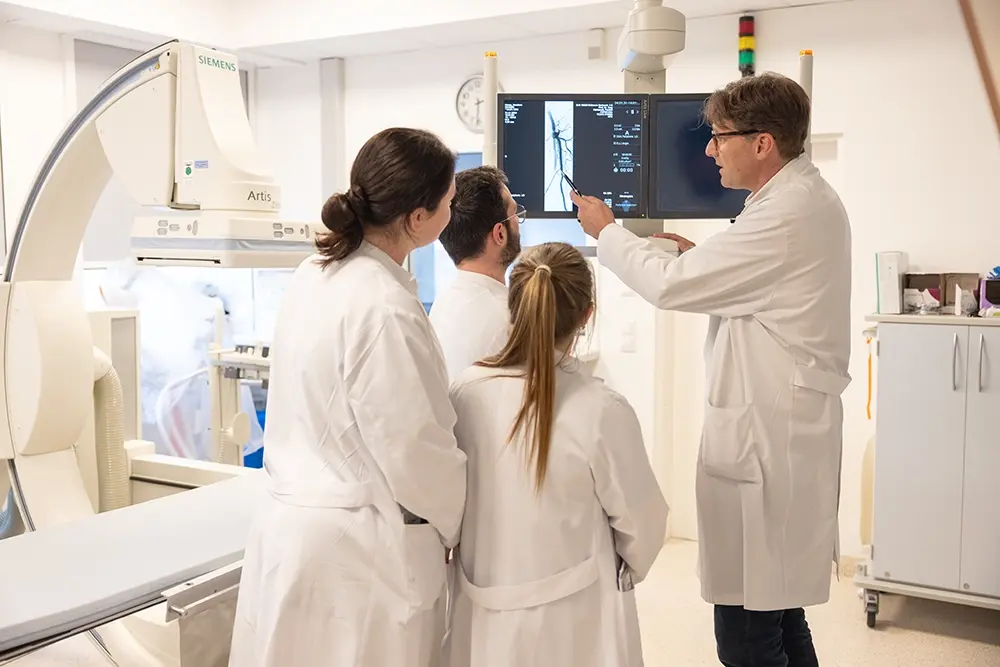
5th year of study
In addition to the main subjects, the 5th year includes, for example:
- Dermatology
- Rheumatology
- Nephrology
- Ophthalmology
- Oncology
- Pulmunology
6th year of study
Additional theoretical and practical subjects in the last year include, for example:
- Gynecology
- Family Medicine
- Psychiatry
- Infectious Diseases
The UMFST-UMCH curriculum
Holistic medicine in clinical and pre-clinical areas
A comprehensive medical program
The UMFST-UMCH medical curriculum offers a foundational education in all essential medical disciplines. Over 12 semesters, students are taught in both clinical and pre-clinical subjects, optimally combining theory and practice.
The downloadable document provides an overview of the program's organizational and content structure and lists the required and elective courses.


Diverse elective courses
Customize your studies with a variety of elective courses
The perfect complement
In addition to the core subjects, the curriculum includes numerous elective courses that perfectly complement the program. This enables students to focus early on areas of interest and lay the groundwork for future specialization. Each year, at least one elective must be taken, though multiple courses are possible.

Academic year 2026/2027
Your path to a successful medical education
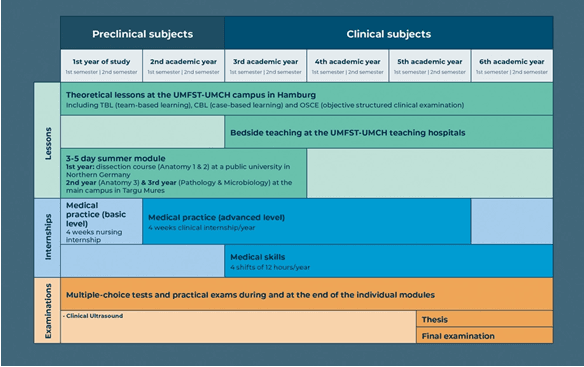
The academic year at UMFST-UMCH consists of a combination of theoretical lectures and practical training phases, supplemented by exams and summer modules. Starting from the third year, theoretical instruction is regularly complemented by clinical internships in teaching hospitals.
Do you have questions about studying medicine at UMFST-UMCH?
Here are the answers to the most common questions.
The duration depends on the specialty.
Examples include:
- Internal Medicine: approximately 5 years
- Surgery: approximately 6 years
- Pediatrics: approximately 5 years
- General Practice (Family Medicine): approximately 5 years
- Radiology: approximately 5 years
The exact duration and requirements are regulated by the regional medical chambers (“Ärztekammern”).
Germany offers:
- High-quality residency training
- Modern healthcare infrastructure
- Strong demand for physicians
- Competitive salaries
- Opportunities for specialization and research
- International working environments in many hospitals
Many international graduates choose Germany for both residency training and long-term professional development.
Students can strengthen their future opportunities by:
- Developing strong clinical skills
- Improving German language proficiency
- Participating in internships and observerships
- Building professional networks
- Joining research projects
- Attending medical conferences and workshops
Early preparation can significantly improve residency and career opportunities.
The campus is a branch of the Romanian George Emil Palade University of Medicine, Pharmacy, Science and Technology of Targu Mures (G.E. Palade UMFST Tg. Mures), offering a study program of Medicine in English. The advantages of studying medicine in English for your professional future are obvious. By practicing your language skills during your studies, you will deepen them and set the course for a successful career at an early stage – not only in an international context. The English language predominates in science and research and serves international communication. At the same time, you broaden your linguistic and cultural horizon by studying in an international environment. Connect with other students who also like to look beyond their own horizons while you are studying. The theoretical lectures take place in a campus building in Hamburg-Bahrenfeld with modern equipment and administration. In small groups, you will be closely supported until graduation by motivated teaching staff. The bedside teaching from the 3rd academic year onwards takes place on the UMFST-UMCH Teaching Hospitals.
No. As a student at the campus, you are enrolled at the George Emil Palade University of Medicine, Pharmacy, Science and Technology of Targu Mures. The university is one of the leading state medical faculties in Romania. The campus is a branch of the G.E. Palade UMFST Tg. Mures
The exact date on which the winter semester begins is determined anew each year. However, it is always a date between the end of September and mid-October. The corresponding date for the respective winter semester is always announced in good time – as soon as it is fixed – and published online.
Both winter and summer semesters at UMFST-UMCH always last 14 weeks.
At UMFST-UMCH, classes are taught in English. Bedside teaching (the clinical-practical part in years 3 to 6) at the German partner hospitals or clinics is in German/English.
The English language skills should be minimum B2. Applicants could summite certificates (IELTS, Cambridge) or could be certified by the test organized during the selection interview. Medical studies in English are generally easy for German high school graduates to master. Furthermore, during the first year, the course medical terminology that introduces students to medical terminology is taught in English.
In order to participate in clinical education in Germany (years 3–6), international students must have a language level of approximately B2 in the German language by the beginning of the third academic year.
You can find more information about the study structure here.
The first three years of study include three modules which are completed in Targu Mures. These modules are the following:
Year 1: Anatomy 1 and 2 (Laboratory of the Anatomy Department)
Year 2: Anatomy 3 (Laboratory of the Anatomy Department)
Year 3: Bacteriology/Virology/Parasitology (Laboratory of the Microbiology Department) and Pathology (Laboratory of the Pathology Department)
The university cooperates with a large number of partner hospitals and clinics throughout Germany for teaching bedside from the third academic year onwards. Of course, the personal preferences of the respective student are taken into account in the concrete assignment to a partner hospital or clinic. A mandatory survey in this regard will take place at the beginning of the second academic year. If there are more students applying for a certain partner hospital or clinic than there are places available, places will be awarded strictly according to their performance (ranking according to the average grade of the first year of study, in the case of a tie, by lot).
This varies from case to case. If you are unsure, please contact the German embassy in your respective country of origin for further details. In any case, please make sure to allow sufficient time for any processing time. Of course, we will be happy to assist you if you need a written invitation or something similar in the context of the visa application. Please contact us in such a case.
Upon completion of your studies at UMFST-UMCH, you will have the opportunity to acquire the “Dr.” respectively “PhD” degree at the UMFST Doctoral School. The program is open to all graduates of medical programs from Romania, Germany and abroad, and is aimed in particular at those who, in addition to the successful completion of their studies, wish to acquire the ability to carry out more in-depth scientific work during their time as an assistant doctor.
The PhD program is a scientific research doctorate and the “PhD” degree is the most well-known doctoral degree in the English-speaking world. Thus, the doctorate offered by the UMFST Doctoral School is a fully and internationally recognized degree from the so-called third cycle of the Bologna system.
The aim of the program is to provide you with methodologically, professionally and academically comprehensive training to open your way into the world of medical research and thus to enable you to pursue a scientific career. During the program you will be involved in an extensive research project and participate in a number of selected accompanying events. The person holding the title is entitled to use the title of “Dr.” respectively “PhD” in Germany as well as in all other EU member states. In addition, it is possible to have the doctorate entered on your identity card.
Alternatively, you can also apply for a doctoral position at a state university in Germany and thus acquire the German doctoral degree.
Yes, a transfer to UMFST-UMCH in the 2nd, 3rd, 4th or 5th academic year is possible for 2026/2027. The prerequisite for this is that you have previously studied at a university based in the EU. We will be happy to inform you in advance about the possible crediting of your previous studies and the ECTS points you have earned. Please contact the UMFST-UMCH Team to find out what information we need for this.
- The interview lasts 15-20 minutes.
- the evaluation lasts 90 minutes, more than enough time to answer the basic multiple-choice questions.
- subject to availability, a confirmation for the winter semester or
- a rejection.
You will receive your results within 48 hours of your participation in the admission procedure. By announcing your results as soon as possible, we allow you to use the time before you start your studies at UMFST-UMCH as efficiently as possible – for example, to prepare for your graduation (if you apply before obtaining your secondary school diploma), for voluntary or honorary activities, or to complete internships. This will also give you plenty of time to travel or look for accommodation.
Those who have completed the admission procedure will receive – depending on the success of the admission procedure consisting of an evaluation and interview – the following:
- to the extent of available study places, acceptance for the immediately upcoming winter semester or – if the availability of study places for the immediately upcoming winter semester is exhausted –
- acceptance for the winter semester immediately following the immediately upcoming winter semester with the offer to be placed on the waiting list for the immediately upcoming winter semester, or
- a rejection.
If you are an EU citizen and have a higher education entrance qualification, no specific average grade is required to apply for the degree program at UMFST-UMCH. You must present a school-leaving certificate that gives you access to higher education (Abitur or equivalent). Our most frequent degrees are
- International Baccalaureate
- American High School Diploma
- A - Levels
For further questions, you will need to contact the UMFST-UMCH Admission Team for more information about the requirements for your diploma, depending on which country issues it.
You must submit the following documents with your application:
Personal statement in English (Calibri font, font size 11, 250–300 words) that answers at least two of the following questions:
- Who/what influenced your decision to apply to medical school?
- What will you do to become a good student/doctor?
- What plans and visions do you have concerning your medical education?
- Which of your extracurricular activities have influenced you the most and why?
- What is your favorite book and how has it influenced you?
- Are there any extraordinary/unusual circumstances in your life that would make us consider your application in a different light?
- Describe the environment in which you have lived so far and tell us what you would like to change about it.
- What changes would you like to bring about through your work?
Curriculum vitae in English language
Study diploma/certificate (High-school diploma, i. e. Abiturzeugnis, IB Diploma, Baccalaureate or others). Your school diploma must give you access to higher education in your country of origin
- If your diploma was issued in a NON-EU country and/or the language in which the diploma was issued is NOT English, German or Romanian, please contact the UMCH Admission Team to check the additional application requirements.
- If you are still in your final year and you do not have a high school diploma yet, please submit this form (filled in and signed).
Passport or Identity card (ID: both sides / Passport: pages 1-4)
High school transcript of record from the 9th until 12th grade (13th grade)
Proof of payment of the application fee of € 595
You can (and should) submit your application before you receive your school diploma. Since the allocation of study places at UMFST-UMCH takes place successively, it is of great advantage if you apply early. Please fill out this form and submit it to us.
The application period for the upcoming academic year always runs until the end of July. You can find all information here.
The admission procedure at UMFST-UMCH consists primarily of a motivation-based interview for testing the English language skills and a subsequent evaluation. The interview focuses primarily on the applicant’s personal qualifications and motivation. This may also include questions about the application documents you have submitted (e.g., work or internship certificates for previous activities in the medical field or voluntary work). The evaluation consists of 75 multiple-choice questions on biology, chemistry and general knowledge. All three topics are equally weighted. The results of the evaluation and the interview are included at a ratio of 60:40 for the overall evaluation.
You can take part in the admission procedure at any time and without complications. It is not necessary to travel to Hamburg for one of our admission dates. It is possible to participate in the brief evaluation and the motivation-based interview online via video conferencing.
You will receive your results within 48 hours of your participation in the admission procedure. By announcing your results as soon as possible, you can use the time before you start your studies at UMFST-UMCH as efficiently as possible – for example, to prepare for your graduation (if you apply before obtaining your school diploma), for voluntary or honorary activities or to complete internships. This will also give you plenty of time to travel or look for accommodation.
Those who have completed the admission procedure will receive – depending on the success of the admission procedure consisting of evaluation and interview – the following:
- an acceptance for the immediately upcoming winter semester to the extent of available capacities
- an acceptance for the next academic year (immediately after the year for which the applicant applied) if the capacity of study places for the immediately upcoming winter semester is exhausted
- a rejection.
Tuition fees are € 14,900 per semester for applicants from EU countries, EEA countries, the United Kingdom and Switzerland. For applicants from all other countries, they are € 17,400 per semester. In addition, there is a one-time application fee of € 595 and a one-time enrollment fee of € 4,500. There is also the option, from the 3rd year onwards, to complete the rest of the studies at the UMFST Campus in Targu Mures. With this option, the tuition fees for the period from the 3rd year of study amount to € 3,000 per semester. For the first two years of study, the above conditions apply to applicants from EU countries, EEA countries, the United Kingdom and Switzerland, or applicants from all other countries.
Please transfer the tuition fees to the following account:
CPE Europe GmbH
Hamburger Sparkasse (HASPA)
IBAN: DE92 2005 0550 1503 6472 71
BIC: HASPDEHHXXX
As a student at UMFST-UMCH, you have the opportunity to take out a low-interest student loan from Hamburger Sparkasse (Haspa). You can choose between full or partial financing, and you can individually choose the amount of the loan you want to take out. For a loan of up to €100,000, the application process is simplified. Full or partial financing of the tuition fees offers you maximum flexibility and is tailored to your personal situation. You can find more detailed information here.
During your studies at UMFST-UMCH, you are of course free to work part-time. However, due to the high demands and time required for medical studies, we advise our students to work only on weekends and/or during the semester break. It must be ensured that the obligation to attend courses is not violated by a potential part-time job and that you always have enough time for self-study.
G.E. Palade UMFST Tg. Mures is is accredited by the Romanian Agency for Quality Assurance in Higher Education (ARACIS). ARACIS is a full member of the European Association for Quality Assurance in Higher Education (ENQA). The university is labeled with the highest status H+ by anabin, the information portal for the evaluation of foreign educational qualifications published by the Secretariat of the Standing Conference of the Ministers of Education and Cultural Affairs of the States in the Federal Republic of Germany. Thus, it is considered as a higher education institution in Germany. In 2023, the program of study Medicine from Hamburg was accreditated by IAAR (Independent Agency for Accreditation and Rating). The activities of IAAR comply with the Standards and Guidelines for Quality Assurance in the European Higher Education Area (ESG) and the World Federation for Medical Education WFME.
The six-year medical degree program at UMCH leads to a university degree in medicine, which corresponds to the professional qualification listed in Annex V of the EU Professional Qualification Directive and forms the basis for obtaining a license to practice medicine in the EU and many other countries. When applying for a license to practice medicine in Germany it should be noted that in comparison to holders of a German degree in human, additional proof of sufficient knowledge of German must be provided (B2 in general and C1 with regard to medical terminology). For holders of a high school diploma from a German-speaking country, however, this requirement is generally not applicable. Furthermore, the UMFST of Targu Mures together with UMCH in Hamburg is listed in the World Directory of Medical Schools (WDOMS) (FAIMER school ID: F0000226). This currently enables students to take the United States Medical Licensing Examination (USMLE). The study program offered in Hamburg by the UMFST of Targu Mures uses the European Credit Transfer and Accumulation System (ECTS), which ensures that academic achievements can be compared throughout Europe. A total of 360 ECTS points is earned during the 6-year study program. Each academic year contains 60 ECTS points.
In addition to the medical subjects, more complementary subjects are taught:
- Informatics and Biostatistics – a solid base for the future medical profession
- Patient-Doctor Communication – for developping medical soft skills
- Medical Deonthology&Bioethics and Ethics and academic integrity – a fundament for professionalism in healtchare system
- Cultural studies – as a new persepective on medicine and life itself
Romanian cultural studies:
Above all, this course serves to broaden the students’ horizons. In this way, they learn to focus on a broader range of topics. Through the extensive contents of the course, which range from culture to ethics and history, they learn about new perspectives that will be of great use to them in their studies and future professional life. The course also explores the relationship between culture and cognition. Different types of interactive teaching methods are used to collectively develop working techniques that help students improve their interpretative and critical competencies.
In cooperation with the student residences Uninest, THE FIZZ and Urban Living, UMFST-UMCH offers you the option of living in fully furnished student apartments at reasonable prices during your studies in Hamburg.
Uninest‘s apartments are located in the modernly equipped “Navale” student residence, which comprises a total of 328 studios. The advantages of Uninest include, among other things, a separate kitchen with cooker, microwave and freezer/cooler combination in each apartment as well as a package acceptance and janitor service.
THE FIZZ is located in Altona-Nord. In addition to high-quality furnishings in the individual apartments and free rental items, the building’s outdoor facilities and community areas – such as a roof terrace, a lobby and a movie lounge – are among the biggest plus points for your personal living comfort.
Urban Living is a modern building complex with various apartment types in the Hamburg district of Ottensen. The apartments all have their own kitchen and bathroom as well as a balcony or (roof) terrace. In addition, the residence hall has, among other things, an event kitchen, a sports field and a fitness room.
In addition to Uninest, THE FIZZ and Urban Living, the accommodation platform HousingAnywhere is also one of the partners of UMFST-UMCH. Among other advantages, the platform is characterized by its particularly secure booking system. Moreover, as a student of the university you will receive VIP status, which will increase your chances of finding a room or an apartment many times over.
Here you can find out more about our partners in the field of housing.
In UMFST-UMCH’s own refectory – the UMCH Cafeteria – students can choose from two dishes daily, one of which is always vegetarian or vegan. There is also a varied selection of sandwiches, salads and drinks as well as a daily changing soup. Payment takes place cashless.
If you are hungry or thirsty in between, there are also various vending machines for snacks and drinks available on campus.
After arrival, all UMFST-UMCH students must:
- Register their address in Germany
- Apply for a residence permit at the immigration office
You should apply as early as possible. German student visa processing times can take several weeks or months, so early preparation is essential for UMFST-UMCH applicants.
Yes. If you are a non-EU student, you must apply for a German student visa to study at UMFST-UMCH in Hamburg.
You must submit your application at the German Embassy or Consulate in your home country before starting your studies at UMFST-UMCH.
To apply for a Germany student visa for UMFST-UMCH, you typically need:
- Valid passport
- Completed German visa application form
- Official admission letter from UMFST-UMCH
- Proof of financial resources (blocked account or equivalent)
- Health insurance coverage
- Biometric passport photos
You must show proof of sufficient funds, usually through a blocked account (Sperrkonto) with the required yearly amount. Alternatives include:
- Education loan confirmation
- Official bank statements
Yes. You need travel health insurance for your visa application and German student health insurance for enrollment at UMFST-UMCH.
You must provide:
- Admission letter from UMFST-UMCH
- Previous academic certificates (e.g. Abitur, IB Diploma, A-Levels)
- Transcripts and certified translations (if required)
Language requirements depend on your program. In many cases, proof is already included in your UMFST-UMCH admission letter.
Incomplete applications are usually rejected. Make sure all required documents for your German student visa for UMFST-UMCH are complete and accurate.
- Check the visa requirements on the website of the German Embassy in your country of residence.
- Prepare all visa documents
- Complete the application form
- Book your visa appointment
- Attend the visa interview
- Receive your German student visa
After arrival, all UMFST-UMCH students must:
- Register their address in Germany
- Apply for a residence permit at the immigration office
- Apply early
- Submit complete and accurate documents
- Prepare financial proof carefully
- Book your embassy appointment early
Yes. Graduates may apply for an 18-month residence permit to search for employment opportunities in Germany after completing their studies.
Yes. Medical residency training in Germany is generally a paid hospital employment position.
Resident doctors in Germany typically earn approximately €4,500–€6,000 gross per month, depending on the hospital and specialization.
Yes. Graduates may explore residency and career opportunities in Germany according to applicable licensing and language requirements.
The EU Blue Card is a residence and work permit option for qualified professionals, including doctors working in Germany.
After graduating from UMFST-UMCH, students receive a medical degree that can open pathways toward residency training, clinical practice, research, and healthcare-related careers in Germany and internationally.
The typical next steps include:
- Completing the degree and graduation requirements
- Applying for medical licensure/recognition in the country where you wish to practice
- Applying for residency training (specialization)
- Starting professional practice or further academic training
For graduates who want to continue in Germany, the process usually involves obtaining:
- Degree recognition
- Medical licensure (Approbation)
- German language certification (typically B2/C1 Medical German)
- Residency placement in a hospital or clinic
Residency training in Germany is called “Facharztausbildung” (specialist training). During this period, doctors work in hospitals or clinics while training in a chosen medical specialty.
Unlike some countries, residency in Germany is employment-based. This means residents are salaried doctors from the beginning of their training.
Medical German/Fachsprachprüfung: C1 Medical German.
Strong communication skills are essential for patient care and professional integration.
No. Germany does not use a centralized residency match system.
Graduates apply directly to hospitals and clinics for residency positions. This allows students greater flexibility when applying to different regions and specialties.
Medical graduates can pursue many different career pathways, including:
Clinical Careers
- Residency training in hospitals
- General practice/family medicine
- Specialized medical practice
- Emergency medicine
- Intensive care medicine
Academic & Research Careers
- Clinical research
- Biomedical sciences
- University teaching
- PhD and doctoral programs
- Public health research
Healthcare Industry Careers
- Pharmaceutical companies
- Medical technology companies
- Healthcare consulting
- Clinical trials management
- Medical affairs
International Opportunities
- Medical practice in other countries
- Global health organizations
- NGOs and humanitarian medicine
- International research collaborations
Yes. Career opportunities depend on the recognition rules of each country.
Graduates should always verify the licensing and recognition requirements of the country where they plan to practice.


